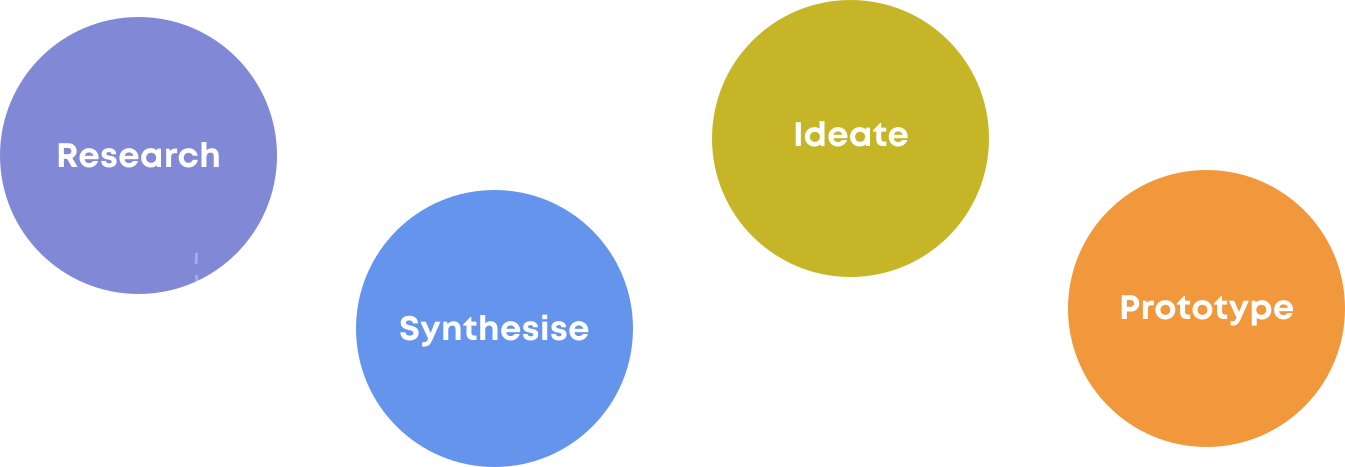
Project Overview
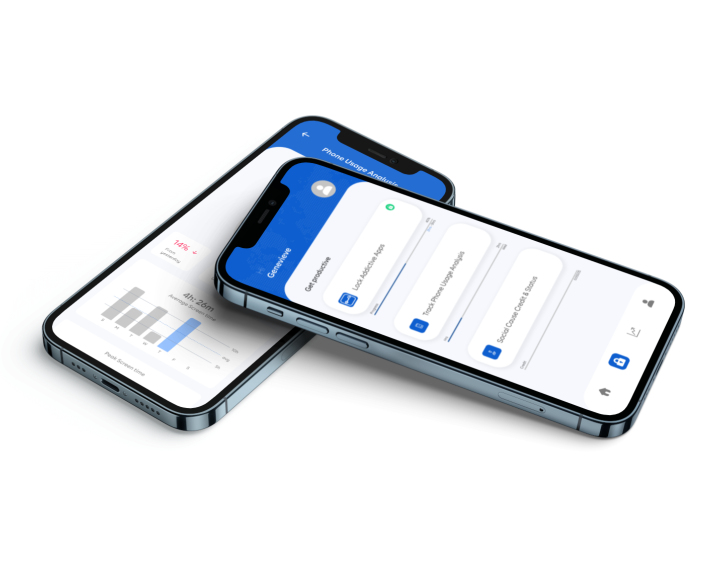
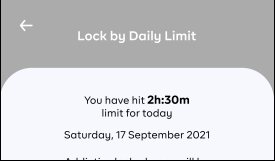
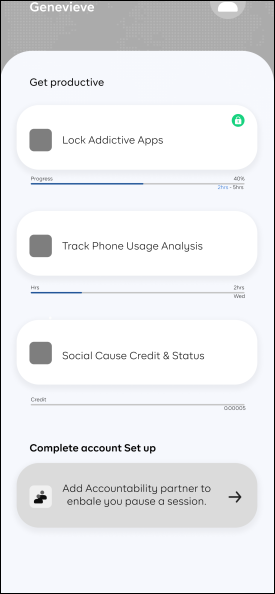
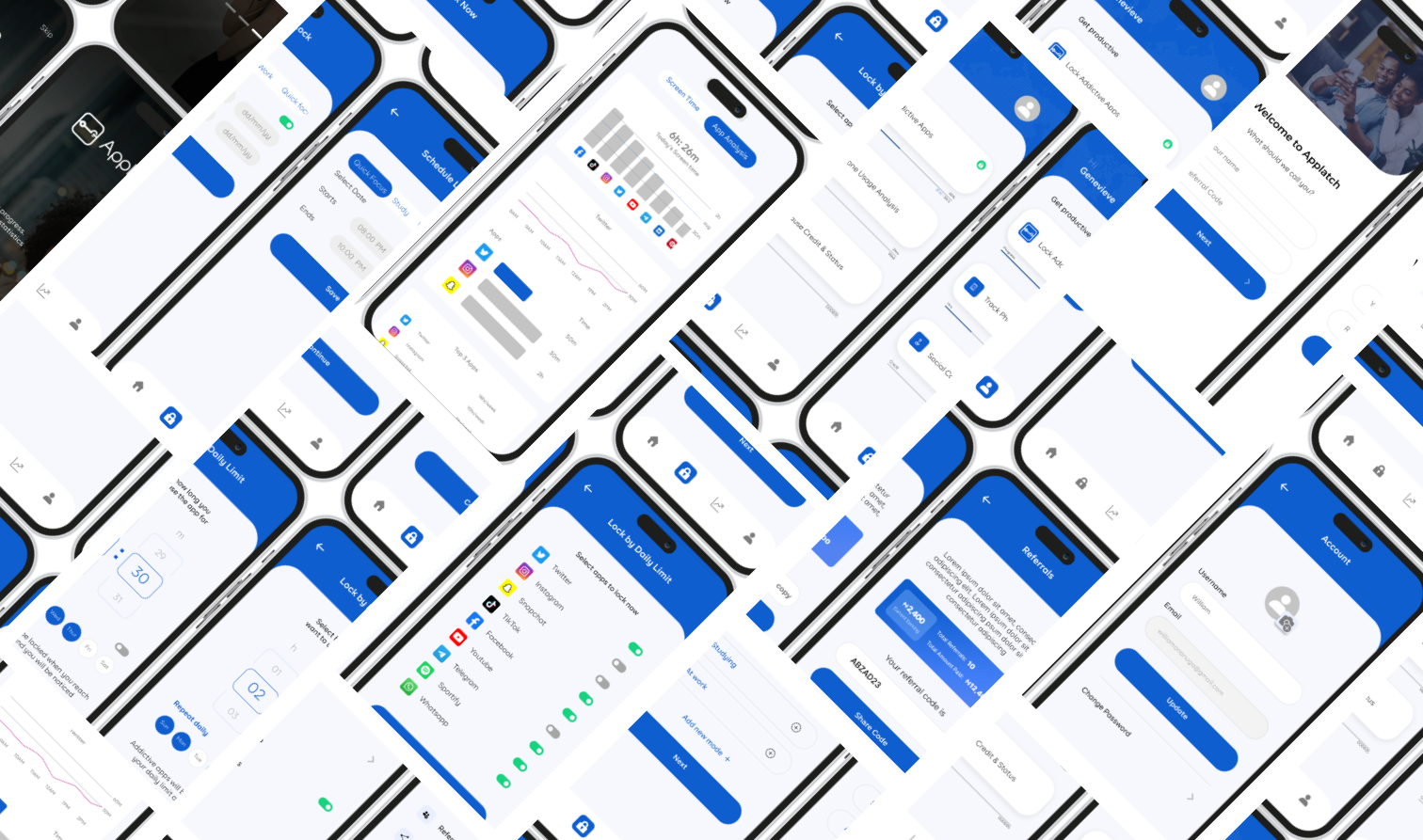
So you know how sometimes you just need to buckle down and focus, but then you find yourself mindlessly scrolling through Instagram or playing Candy Crush? Yeah, we've all been there. That's why Applatch was created- to help users lock those addictive apps for a set period of time, so you can stay on task. Whether you need to study, work on a project, or just want to spend more time in the real world, Applatch has got you covered. You simply set the lock duration and wave goodbye to those distracting apps for a bit.
My Role
UI Designer
Tools
Figma.
Timeline
4 Weeks
Product Challenge
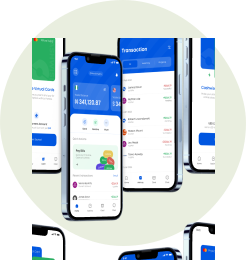
The challenge is to make available a solutions to daily payment needs and international funds movement by individuals and businesses. Some of the major challenges are;
- To provide convenient and accessible mobile wallet and payment solutions for the underbanked and unbanked population in Nigeria and across Africa.
- To integrate all the banking needs of individuals into one App for ease of use.
- To provide an easy and convenient way to make mobile payments to and from multiple locations worldwide.
- To provide an easy and convenient way to make remittance to Africa from Africans in Diaspora.
Project Background
International money remittance and transfers within Africa remains a major challenge as traditional banks struggle to meet the growing need of Africans in diaspora amid strict policies. Nigerians need a reliable solution for ease of money transfers to their loved ones from their country of residence to (and within) their country of origin. These people represent the primary target audience for Cashwise. This product is to provide affordable and convenient mobile banking solutions for Africans at home and in the Diaspora.
The product offers a wallet system solution which will enable ease of funding and transfers from different countries. Money transfer will be made seamless within countries where Cashwise is actively doing business.
Research
User Interview
The success of any product heavily depends on how well it aligns with the requirements and expectations of its target audience. And this holds even more significance when it comes to designing mobile applications – the world's most frequently used channel for communication, entertainment, and commerce.
As a designer, I always ensure that I take the necessary steps to understand my client's vision and their intended users' needs before starting on any project. In this particular case, my client came to me with a detailed description of her desired outcome and a set of reference features that he aspired to incorporate to his application. Being familiar with both the Android and Apple ecosystems, these references gave me a clear idea of what she was aiming for.
However, I knew that merely following his directives and making an exact copy of the reference features would not be the best approach. I wanted to ensure that the app would cater to the needs and preferences of the intended users while having an intuitive interface that they would easily navigate through.
To execute this while keeping the end-users' perspectives in mind, I initiated the conduction of user interviews with individuals that were facing similar issues or challenges. And to gain the most valuable insights and perspectives, I made sure to interview people from diverse age groups ranging from the digitally-savvy Gen Z to the fast-paced millennials and the adaptive Generation Alpha.
These interviews allowed me to better understand the challenges that the users were facing in their daily lives and how they interacted with similar applications. Similarly, their feedback and thoughts on what additional features they would love to see translated into valuable insights that shaped the final product.
In conclusion, the user-interview phase is indeed a crucial element of any application development project. Conduction of user research and collecting user feedback is an integral part of designing an application that not only meets the client's requirements but also resonates with the target user groups. My approach during this phase allowed me to deliver an application that both the client and users were satisfied with.
Competitive Research
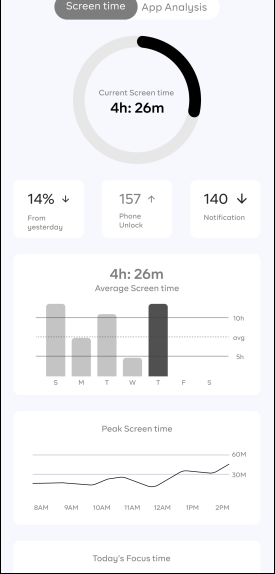
After conducting enlightening interviews with likeminds' users, I proceeded to analyze the references provided by my client. To gain comprehensive insight into users' opinions of the app, I examined key metrics such as usability graphs, addictive app tendencies, and measures of app value. Through this process, I was able to discern critical aspects for Applatch and identify important features that need to be incorporated.
Sythesise
After conducting thorough research through user interviews and a competitive analysis process, I gathered sufficient data which unveiled the vital features that users would prefer to have on the app.
As users become increasingly mindful of their screen time and digital well-being, the need for mobile applications that curb addictive app usage becomes more pressing. To meet this demand, we have identified the major features that users would like to see in an app designed to lock addictive apps.
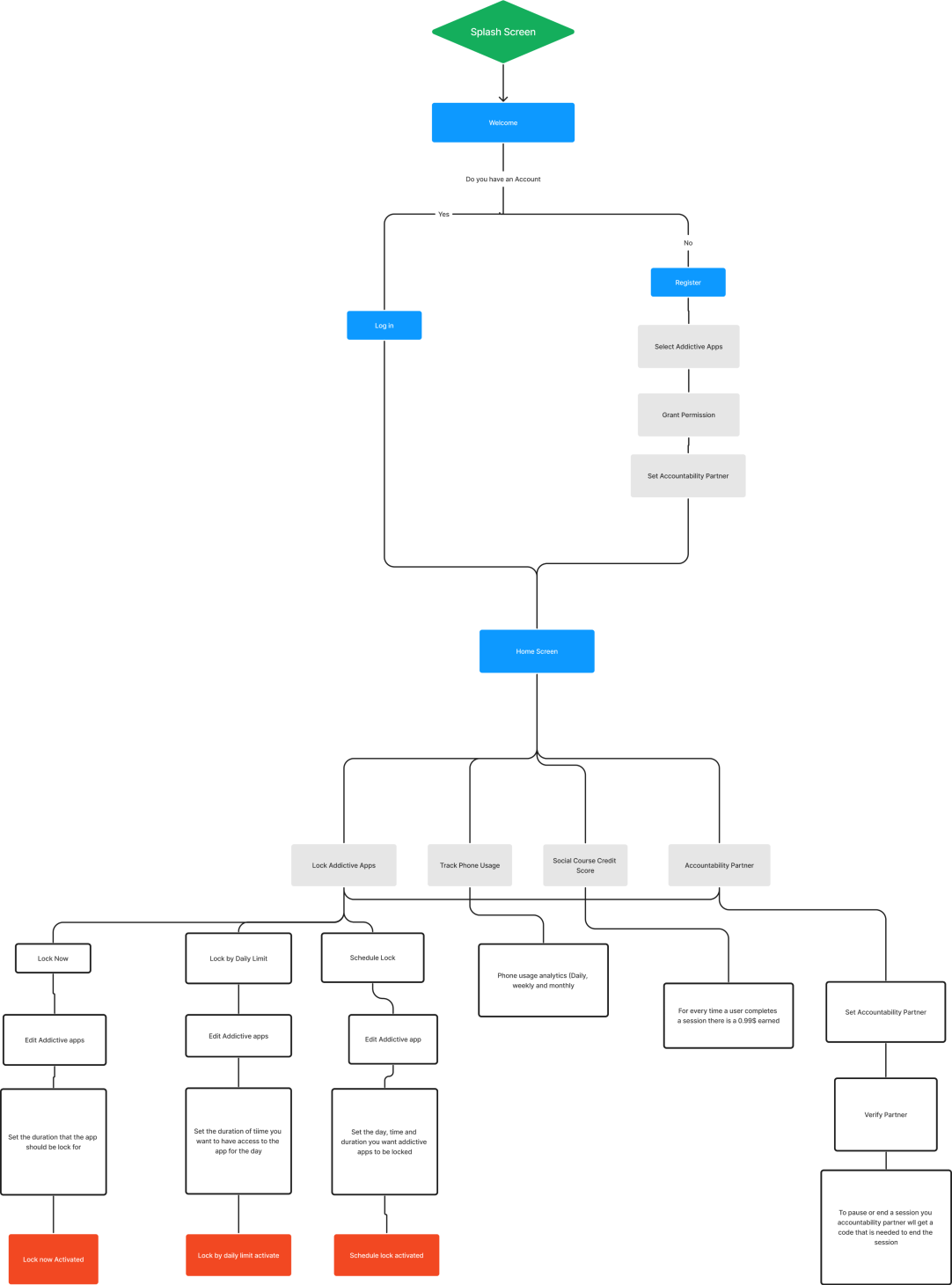
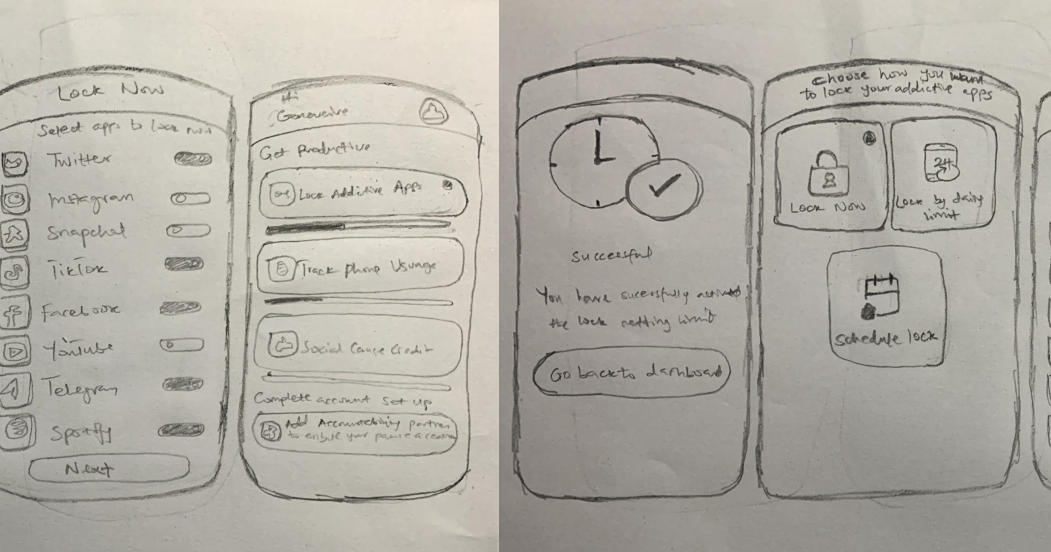
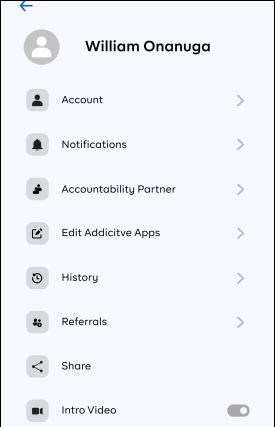
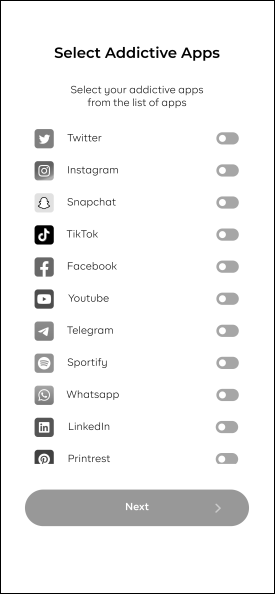
Firstly, users will appreciate an app that allows them to easily select the apps they find most addictive. This feature should be user-friendly and intuitive, allowing users to quickly identify and select the apps they would like to control. As different individuals may have different apps they find addictive, a customizable feature would fit the bill perfectly.
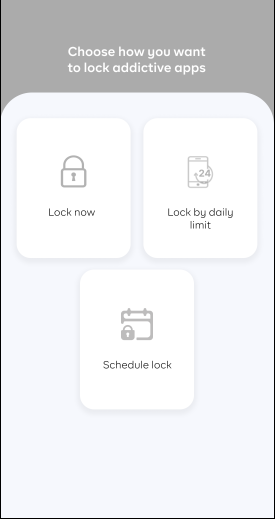
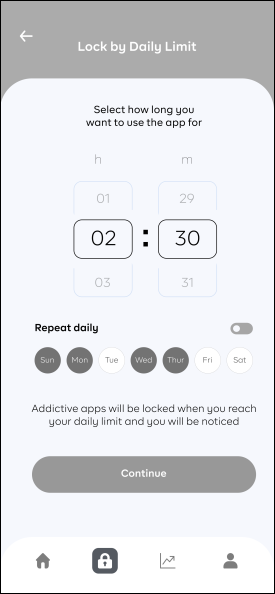
Secondly, users will like an app that offers a range of locking options. Some may prefer a complete lock-out of the app, while others may prefer timed periods of access. The app should provide the flexibility to set limits that meet each user's unique needs.
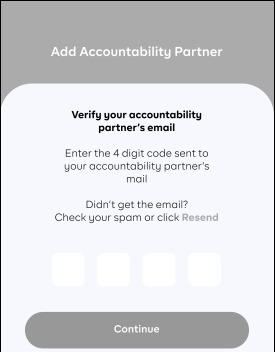
Thirdly, it would be helpful to have a feature that incentivizes users to abide by the limits they have set. This could be in the form of a reward system or a reminder system that tracks progress and encourages adherence to pre-set limits. Gamification strategies can also be incorporated to make the usage limits a fun challenge for users to achieve, rather than a restrictive measure.
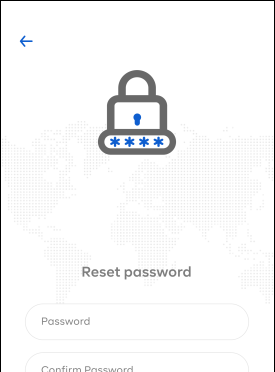
Lastly, privacy and security remain of paramount concern. As such, users will like to see a feature that allows them to create a personal passcode or biometric authentication to access the app. Moreover, the app should be uncompromising in maintaining privacy, preventing any sneaky workarounds or backdoors to facilitate app usage.
In sum, an app that offers a customizable selection of addicting apps to lock, a range of locking options, incentivization features, and uncompromising privacy and security measures will likely appeal to users. A well-designed addiction-curtailing app will assist in giving users the freedom they need to use their devices without the associated anxiety of losing control over their time and usage patterns.